Views: 0 Author: Site Editor Publish Time: 2025-08-21 Origin: Site


Choosing manhole cover grating helps a project reach its goals. Covers keep people and cars safe from open holes. The material changes how long covers last and how much weight they hold. Load rating tells what covers can support. Size and fit help covers stay in place. Safety is important in busy places. Weather can change how covers work. Picking the right manhole cover grating makes projects better.
Pick manhole cover materials by looking at where your project is, how much weight it needs to hold, and the weather. This helps the cover last long and stay safe. Match the cover’s load rating to the kind of traffic. This stops damage and keeps people and cars safe. Use covers that do not slip and can be locked. This makes things safer and stops accidents or people getting in when they should not. Measure the manhole opening well and put the cover on right. This makes sure it fits and works for a long time. Choose suppliers who sell good products, have certificates, and give good help. This saves money and keeps you from having problems later.
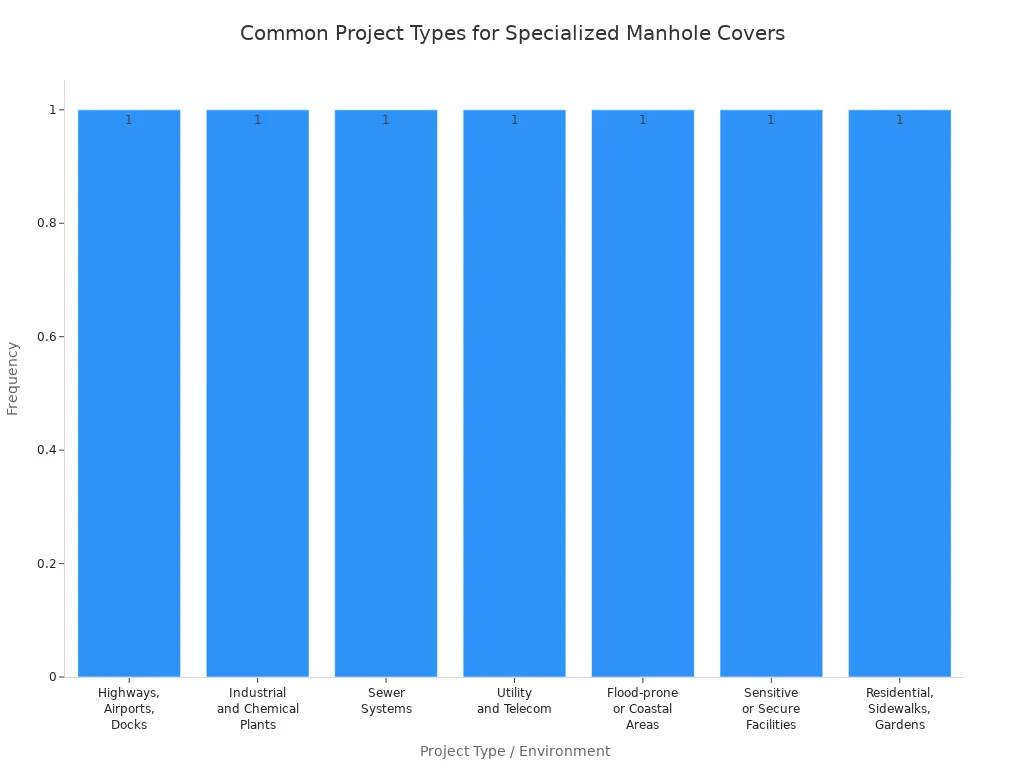
Every project site is different. Some places, like highways or airports, need manhole cover grating that can hold heavy weight and not rust. Industrial plants need drain grates that let gas out and stand up to chemicals. Coastal and flood areas need covers that keep water out and do not rust. The table below shows how the place changes what features and materials you need:
| Project Type / Environment | Specialized Manhole Cover Feature(s) | Typical Materials / Characteristics |
|---|---|---|
| Highways, Airports, Docks | Heavy load-bearing, durability | Ductile iron, cast iron, reinforced concrete |
| Industrial and Chemical Plants | Ventilation, corrosion resistance | Vented covers, composites, fiberglass |
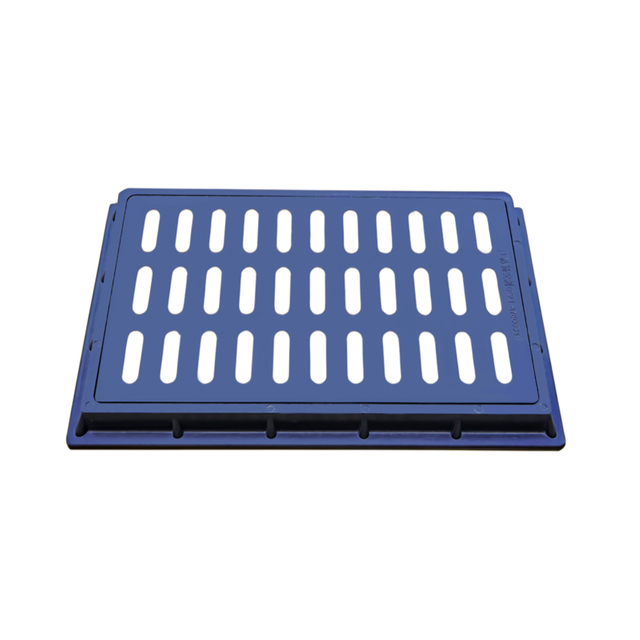
| Sewer Systems | Ventilation, gas release | Vented covers with grills or perforations |
| Utility and Telecommunication | Non-conductive, security, alignment | Fiberglass, lockable covers, custom shapes |
| Flood-prone or Coastal Areas | Watertight sealing, corrosion resistance | Stainless steel, ductile iron, sealing gaskets |
| Sensitive or Secure Facilities | Security, durability | Lockable covers, stainless steel |
| Residential, Sidewalks, Gardens | Lightweight, moderate load | Concrete, fiberglass, composite polymers |
Composite materials like FRP do not rust and can handle chemicals. They work well in very hot or cold places. They also do not need much care.
The kind of traffic over a manhole cover matters. Medium Duty covers hold 16,000 to 40,000 lbs. These are good for parking lots and small cars. Heavy Duty covers hold at least 40,000 lbs. They work for streets and trucks. Extra Heavy Duty covers hold 100,000 lbs or more. These are best for airports and ports. The table below shows load ratings and where to use them:
| Load Rating Category | Minimum Proof Load (lbs) | Typical Applications |
|---|---|---|
| Medium Duty | 16,000 - 40,000 | Compact cars, parking lots |
| Heavy Duty (H-20) | Minimum 40,000 | Streets, highways, trucks, semi-trucks |
| Extra Heavy Duty | Minimum 100,000 | Airports, ports |
How fast water moves is important for drain grates. High water flow needs grates with big open spaces. This helps stop flooding. The design must let water through, block trash, and stay strong. For example, a 10 cfs flow may need a grate with about 3,000 square inches open. The right size makes sure water drains safely.
Good measurements help covers fit right. Use the right tools to measure the manhole opening. Look for any odd shapes. Clean the frame before you measure. Mark each spot and take photos. Give each site a special ID to keep track. These steps help when you order a custom or standard cover. Tight fits and strong fasteners stop accidents and help covers last longer.
For more details about custom choices and products, visit JSCA Composite.
Cast iron and ductile iron are used a lot for manhole cover grating. Cast iron covers have flake graphite inside. This makes them strong but easy to break. Ductile iron covers have nodular graphite. This gives them more bend and strength. Ductile iron covers do not crack or break easily, even with heavy traffic. They also fight rust better, so they work well outside and in factories.
| Property | Cast Iron | Ductile Iron |
|---|---|---|
| Microstructure | Flake graphite (brittle) | Nodular graphite (ductile) |
| Ductility | Low | High |
| Strength | Moderate | High |
| Corrosion Resistance | Moderate | High |
| Brittleness | Prone to cracking under stress | Resistant to cracking and breaking |
| Welding Capability | Difficult, prone to cracking | Good, weldable with standard methods |
Ductile iron covers often meet EN124 D400 load class rules. These covers can hold up to 40 tonnes or more. Cast iron covers are best for places with less traffic or small budgets. Ductile iron covers are good for highways, airports, and factories. For more about these covers, visit JSCA Composite Manhole Covers.
Tip: Ductile iron covers last longer and need less care in busy or outdoor places.
Steel and aluminum covers give different benefits for projects. Steel covers are heavy and very strong. They weigh from 100 to 250 pounds. You need special tools to lift steel covers. This makes work and equipment cost more. Steel covers are good for busy roads and factories. Galvanized and stainless steel covers do not rust as fast as regular steel.
Aluminum covers are lighter, about 40 to 100 pounds. Workers can put in aluminum covers more easily. Lighter covers are safer and cost less to take care of. Aluminum covers are good for sidewalks, parks, and homes. Both steel and aluminum covers can hold weight, but the best choice depends on your project.
For steel and aluminum cover choices, see Water Grates and Covers.
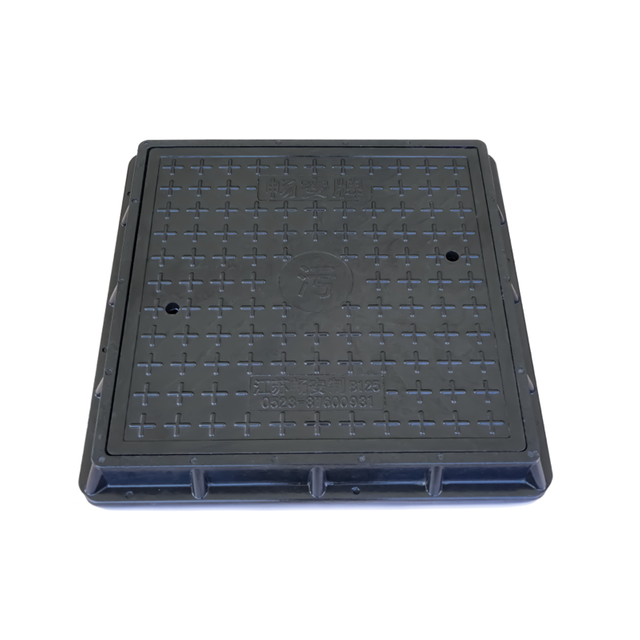
FRP (Fiberglass Reinforced Plastic) and composite covers are new choices for many projects. These covers do not get damaged by chemicals, acids, alkalis, or saltwater. FRP covers can last 30 to 50 years in cities. They do not rust or break easily. FRP covers are light, do not carry electricity, and are easy to move. They work well in chemical plants, sewers, and factories.
Composite covers also stop slips and slow down fire. These covers need little care and keep their shape for a long time. FRP and composite covers are best for places with bad weather or lots of chemicals. For more about composite covers, visit Inspection Covers and About JSCA Composite.
Note: FRP covers are safer in wet or oily places because they do not slip.
Each material has good and bad points. The table below shows how covers compare for rust and care:
| Material Type | Advantages Related to Corrosion Resistance and Maintenance | Disadvantages Related to Corrosion Resistance and Maintenance |
|---|---|---|
| Cast Iron | High strength, good rigidity, impact resistance, moderate corrosion resistance | Prone to theft, noise, movement under traffic, can crack under heavy loads |
| Ductile Iron | High strength, excellent ductility, high corrosion resistance, weldable | Higher cost than cast iron, heavier than composites |
| Steel | High strength, durable, galvanized/stainless steel resist corrosion | Susceptible to rust (if not treated), heavy, higher maintenance costs |
| Aluminum | Lightweight, easy to handle, moderate corrosion resistance | Lower strength than steel, not for heavy loads |
| FRP/Composites | Excellent chemical and corrosion resistance, lightweight, low maintenance | Higher initial cost, lower heat resistance, sometimes lower bearing capacity |
Cast iron covers are strong but can break and need more care in busy places.
Ductile iron covers fight rust and last longer, so they are better for heavy traffic.
Steel covers are strong but need care to stop rust.
Aluminum covers are easy to put in but cannot hold as much weight.
FRP and composite covers fight chemicals and last many years, but cost more at first.
Picking the right cover material depends on where you use it, how much weight it needs to hold, and how much care it will get. Projects in chemical plants or near the sea do well with FRP covers. Highways and airports need ductile iron covers for strength and long life. Parks and homes often use aluminum or composite covers because they are easy to move.
Manhole cover grating needs the right load class for each job. Load classes show how much weight a cover can hold safely. Engineers use standards like EN 124 to sort covers by strength. Each class works for a different place, like paths or airports.
| Load Class | Load Capacity (kN) | Typical Application |
|---|---|---|
| A15 | 15 | Pedestrian-only areas |
| B125 | 125 | Car parks, pedestrian areas with cars |
| C250 | 250 | Kerbside, light vehicle traffic |
| D400 | 400 | Roads, highways, heavy traffic |
| E600 | 600 | Docks, loading areas, aircraft pavements |
| F900 | 900 | Airports, very heavy wheel loads |
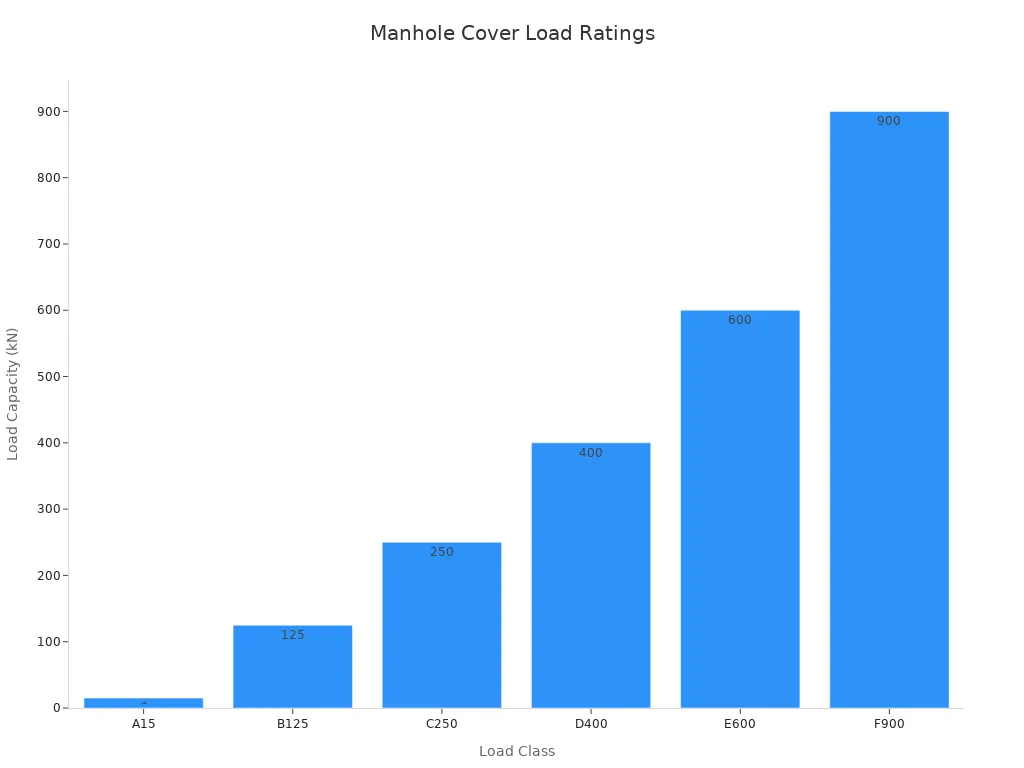
A15 covers are best for places where people walk or ride bikes. B125 covers work for car parks and sidewalks with some cars. C250 covers are good for light vehicles near curbs. D400 covers are made for busy roads and highways. E600 and F900 covers are used in docks and airports with heavy loads.
Tip: Always check the load class before you pick a cover. This helps stop damage and keeps everyone safe.
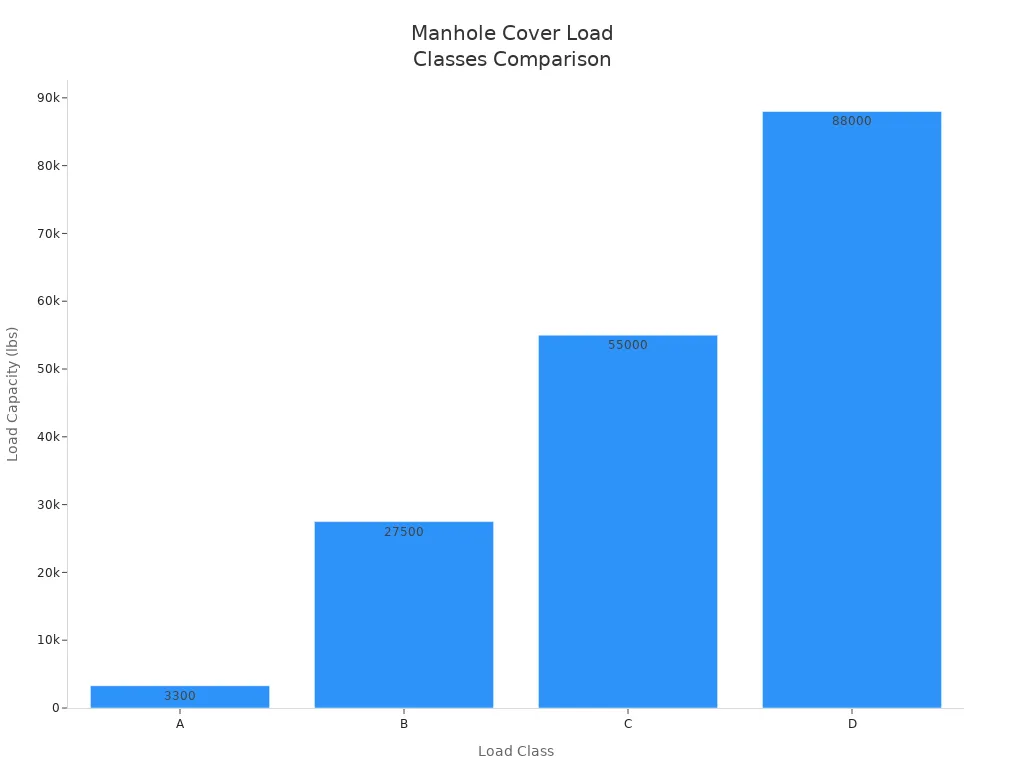
Using the right load class for each place keeps covers safe and strong. Every area needs covers that match its traffic and use. For example, sidewalks need different covers than busy streets.
| Load Class | Load Capacity (lbs) | Suitable Environment |
|---|---|---|
| A | 3,300 | Pedestrian use only (residential areas) |
| B | 27,500 | Medium duty traffic, cars, light trucks |
| C | 55,000 | Heavy duty traffic, forklifts, buses, garages |
| D | 88,000 | Extra heavy duty, trucks, gas stations, industry |
Covers for walkways or gardens only need A15 or A class. These covers are light and easy to move. Parking lots and driveways need B125 or B class covers. These can hold cars and small trucks. Warehouses and bus stations need C250 or C class covers. These support heavy vehicles and forklifts. Highways, docks, and airports need D400, E600, or F900 covers. These must handle the biggest loads and last a long time.
When picking covers, managers should think about traffic, vehicle weight, and the place. Cast iron covers are good for heavy use because they last long. In places with chemicals or salt, FRP covers or covers with coatings last longer. Checking covers often and installing them well helps keep them safe.
Note: To learn more about different covers and uses, visit JSCA Composite Manhole Covers or Inspection Manhole Cover. You can also find custom options at Customized Smart Manhole Cover.
Picking the right covers for each place keeps people, cars, and property safe. It also saves money by needing fewer repairs and replacements. For more help or details, see JSCA Composite or contact the team.
Slip resistance is very important for manhole cover grating. This matters most in busy or public places. Many covers have special surfaces to make them safer. Algrip Slip-Resistant Safety Floor Plate uses laser-made traction points. These points give a strong grip for feet and cars. SLIPNOT makes covers with anti-slip surfaces. These work well even when wet or greasy. Their covers meet rules from OSHA, ADA, and ANSI. Some FRP covers use rough particles like aluminum oxide or silicon carbide. This makes the covers grip well and resist chemicals. Slip-resistant covers help stop slips and injuries. They are a smart pick for any project. To see more choices, visit JSCA Composite.
Tip: Slip-resistant covers help keep people safe, even when it rains or there is oil.
Locking features make manhole covers safer and more secure. These locks stop people from opening covers if they should not. Only trained workers can open locked covers for checks or repairs. This helps stop theft, damage, and accidents. Lockable covers are made to last and fight rust and bad weather. They help cities and companies follow safety rules and protect important places.
Locking covers:
Stop tampering and block people who should not enter
Let only trained workers open them
Lower theft, damage, and accidents
Stay strong in bad weather and against rust
Help meet safety rules
For more about safe covers, see Customized Smart Manhole Cover or contact JSCA Composite.
ADA compliance makes sure covers are safe for everyone to cross. The Americans with Disabilities Act has rules for covers and grating. Slots or holes must be no bigger than 1/4" to 1/2", based on where they are. Slots should go across the main walking path. This helps people using canes, walkers, or wheelchairs. Covers with holes under 1/2" wide meet ADA rules in any direction. ADA compliance is needed for sidewalks, parking lots, and building doors. Covers that do not meet these rules may need to be changed to keep people safe.
ADA rules for covers:
Slots or holes no bigger than 1/4" to 1/2"
Slots go across the main walking path
Covers must be firm, stable, and not slippery
Walking paths should be at least 4 feet wide
To learn more about ADA covers, visit Inspection Manhole Cover or Water Grate.
Note: ADA-compliant covers help keep everyone safe, including people with disabilities.
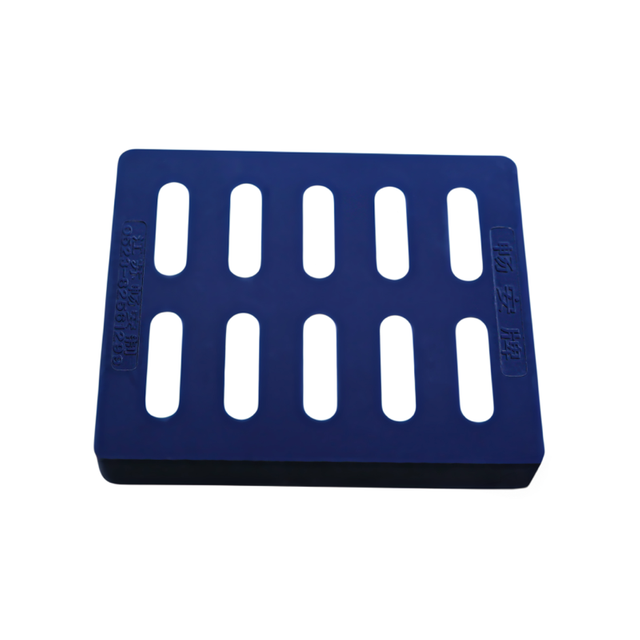
Trench drain grate covers are important for many projects. Engineers use these covers to control water and keep areas safe. Drain grates stop flooding in parking lots and streets. They also help in factories. Pools and playgrounds need covers to stop slips and puddles. Courtyards use covers to keep people safe from water. Food plants and marine sites use drain grates for cleanliness and to fight rust.
The table below shows where trench drain grate covers work well and why they help:
| Trench Drain Grate Material | Common Commercial Applications | Key Properties |
|---|---|---|
| Cast Iron & Ductile Iron | Municipal, industrial, roadway drainage | High strength, durability, suitable for heavy-duty use |
| Stainless Steel | Industrial, food processing, sanitary environments | Chemical resistance, sanitary, aesthetic finish |
| Fiberglass | Industrial, food & beverage, marine environments | Corrosion resistance, slip resistance, lasts longer in corrosive environments |
| Plastic | Pedestrian areas: pools, decks, kennels, landscape | Lightweight, inexpensive, limited durability for commercial heavy use |
| Galvanized & Epoxy-coated Steel | Industrial, municipal, roadway drainage | Load-bearing, moderate cost, corrosion protection |
| Aluminum | Pools, courtyards, industrial sites, playgrounds, public squares | Moderate durability, aesthetic, corrosion resistant |
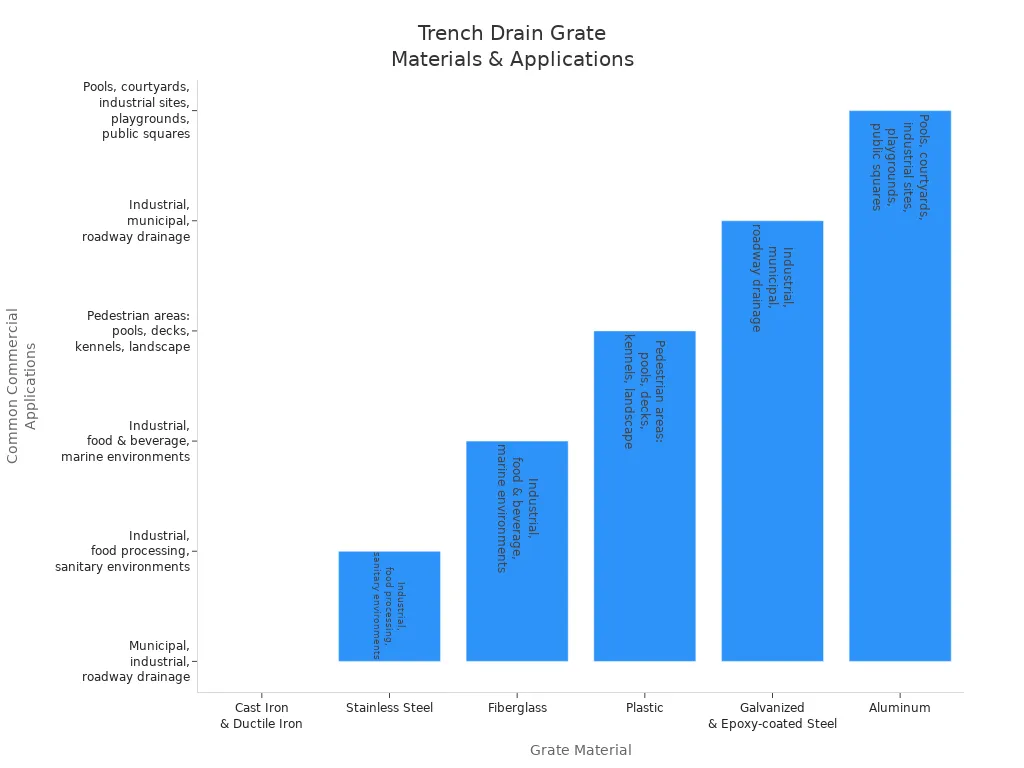
Trench drain grate covers hold up under heavy traffic. They keep streets and factories safe. These covers also help in wet places like pools and parks. For more about drain grates and covers, visit JSCA Composite.
Picking the right material changes how drain grates work over time. Stainless steel covers fight chemicals and heat. Workers in food plants pick these covers because they are easy to clean. Cast iron and ductile iron covers last longer in busy places. Fiberglass covers do not rust or slip, so they work well in marine and chemical areas.
Engineered stone trench drain grate covers mix stone and steel for strength and style. These covers meet rules like BS EN 124:2015 and ADA. They work inside and outside. Aluminum covers look nice and last a while in public spaces. Plastic covers cost less and work for pools and decks. But plastic does not last long in busy places.
Material choices for trench drain grate covers change how much care they need and how much they cost. Stainless steel drain grates need less cleaning and do not break easily. Cast iron covers can rust and need more care. Fiberglass covers last longer in tough places. Picking the best drain grates for each spot saves money and keeps people safe.
Tip: Always pick the material that matches the place and traffic. Metal trench drain covers are best for heavy loads. Fiberglass and engineered stone covers are good for places with chemicals or lots of water.
For more about drainage grates and covers, see JSCA Composite or contact the team.
Installing manhole cover grating the right way helps it last. It also keeps everyone safe. Workers need to pick the best way for each cover type. Some covers, like FRP and composite, are light. These covers need fewer tools. This makes putting them in faster and safer. Heavy covers, like cast iron or ductile iron, are harder to move. Workers may need machines or special tools for these. This can make the job take longer and cost more.
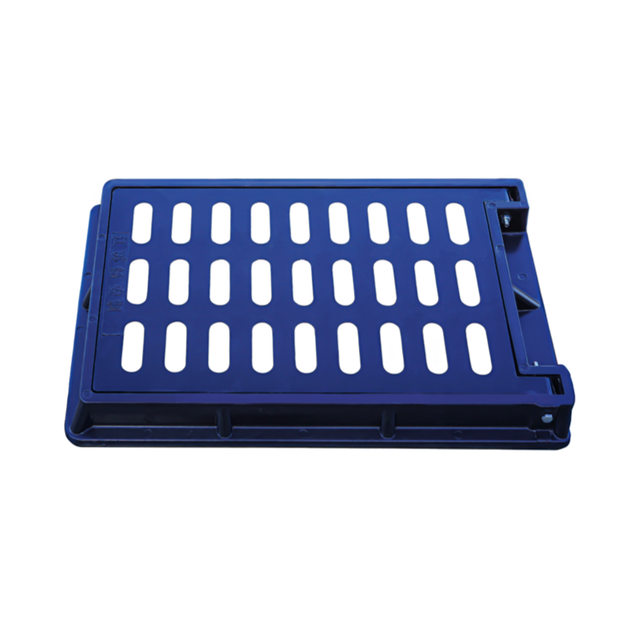
Before starting, workers should clean the frame. They also need to check for any damage. Measuring the opening is important so the cover fits well. Good installation keeps covers from moving or making noise. Some covers have handles or hinges built in. These features help workers put covers in and check them later. For more tips and details, visit JSCA Composite.
Tip: Lighter covers are quicker to install and help stop injuries.
Checking covers often keeps them safe and working right. Each material needs a different amount of care. The table below shows how much care each cover needs over 10 years:
| Material Type | Maintenance Requirements Over 10 Years | Corrosion Resistance | Additional Notes |
|---|---|---|---|
| Cast Iron | Requires regular cleaning and coatings to prevent rust, especially if uncoated. Frequent inspections needed. | Low without coatings; prone to rust | Heavy, durable, but high upkeep and risk of rust without protection. |
| Ductile Iron | Needs less maintenance than cast iron due to better rust resistance; minimal care over many years. | Better than cast iron; more durable | Suitable for heavy traffic; longer lifespan with less frequent maintenance. |
| FRP (Fiber Reinforced Polymer) | Minimal maintenance; no painting or surface treatments needed. Highly corrosion-resistant. | Highly resistant to rust and chemicals | Lightweight, cost-effective long term, ideal for chemical and wet environments. |
FRP covers need very little care. They do not rust or get damaged by chemicals. This makes them good for wet or tough places. Ductile iron covers need less care than cast iron. Cast iron covers need to be cleaned and coated often to stop rust. All covers should be checked at least two times each year. This is extra important in busy places. Adding coatings like epoxy or bitumen helps metal covers last longer.
Note: Picking covers that need less care saves time and money.
For more about care and cover types, see Manhole Covers, Inspection Manhole Cover, or contact JSCA Composite.
Project managers need to think about both price and quality. Some covers are made from plastic or simple concrete. These are good for light use and cost $50 to $100 each. Covers made from polymer concrete or stainless steel are stronger. They fit medium jobs and cost $100 to $300. The most expensive covers use cast iron or special materials. These are for heavy work and cost more than $300 each.
A gully grate with a high load rating (D400) made from SMC costs about $143 per set if you buy ten or more. This type can last over 30 years and is as strong as cast iron. Premium covers like ductile iron and cast iron are very strong and do not rust easily. These covers help save money because they do not need to be replaced or fixed often. Steel covers that cost less at first may need more care later, which can make them cost more over time.
| Product Level | Typical Materials | Load Rating / Use Case | Average Cost Range (per meter or unit) |
|---|---|---|---|
| Entry-level | Plastic, basic concrete | Light-duty, pedestrian areas | $50 to $100 |
| Mid-range | Polymer concrete, stainless steel | Medium load classes | $100 to $300 |
| High-end | Cast iron, advanced materials | Heavy-duty, industrial use | Over $300 |
Buying in bulk makes each cover cost less. Picking high-quality covers with the right load rating, like EN 124, helps stop problems and saves money later. Projects that use better covers have fewer repairs and are safer. For more about prices and products, visit JSCA Composite or contact the team.
Tip: Spending more at first on good covers can mean you spend less on fixing or replacing them later.
Choosing the best supplier changes how much you pay and how well your project works. Buyers should check if the supplier’s covers match what the project needs. The right material is important for strength, rust resistance, and cost. Products must follow rules like OSHA, ADA, ASTM, and local laws.
Key things to look for in a supplier:
Application needs: Make sure the covers fit the job and can hold the right weight.
Material choice: Pick steel, stainless steel, aluminum, FRP, or plastic for your project and budget.
Compliance: Check for certifications like EN 124, ISO 9001, and BSI Kitemark.
Custom options: See if the supplier can make special sizes, finishes, or add your logo.
Price and delivery: Think about how much it costs, how fast it arrives, and your project timeline.
Help with installation: Find out if the supplier helps put covers in and gives support after.
Maintenance: Think about how easy it is to clean, check, and fix the covers.
Compare suppliers: Look at different suppliers for choices in materials, load ratings, and support.
Suppliers with good factories and skilled workers can make custom covers and give better help. Certifications like ISO 9001 and EN 124 show the supplier cares about safety and quality. Good suppliers give manuals, CAD drawings, and advice for putting in and caring for covers. Following environmental rules and having good customer service also help save money and keep people happy.
For more about suppliers, certifications, and help, visit JSCA Composite or contact JSCA Composite.
Note: Good suppliers help you save money and keep your project safe.
Choosing manhole cover grating begins by measuring the opening carefully. The cover should fit the frame well. Teams need to pick the right load class for the job. Using corrosion-resistant materials helps covers last longer. Fasteners must be strong to keep covers in place. Experts and trusted suppliers can help you make good choices. They also help you follow safety rules. Planning ahead and checking details makes covers safer and last longer. For more help, visit JSCA Composite or contact the team.
The best material changes with each project. Ductile iron is good for busy roads. FRP does not rust and fights chemicals. For more info, visit JSCA Composite.
First, clean the frame before you measure. Measure the opening’s diameter or its length and width. Good measurements help covers fit right. For help, see JSCA Composite.
Some covers do not stop slips. FRP and composite covers grip better. Slip resistance helps stop falls. Learn more at Inspection Manhole Cover.
Yes, many suppliers make custom covers for special needs. You can get covers with logos or special locks. See options at Customized Smart Manhole Cover.
Buy trench drain grates from trusted sellers. Pick products that meet safety rules. For more choices, visit Water Grate or JSCA Composite.