
Views: 0 Author: Site Editor Publish Time: 2026-07-06 Origin: Site


Housing critical water management infrastructure beneath vehicular pathways presents a complex engineering challenge. You must strike a delicate balance between structural resilience and rapid maintenance access. Standard utility covers frequently fail when subjected to the dynamic loads of driveway traffic. Concurrently, property owners and contractors often struggle to identify these systems. They ask what the cover is for and how to maintain it. This confusion leads to neglected maintenance, structural failures, and severe pump equipment damage from floodwaters, hydrostatic pressure blow-offs, and hazardous gas buildup. This project spotlight deconstructs the technical evaluation, material selection, and implementation realities of designing and installing a custom driveway water pump manhole cover that meets safety compliance, load-bearing requirements, and operational demands. We will look at the exact field conditions that dictate cover selection and the installation methods that prevent premature failure.
Placing a utility vault directly in a vehicle travel path changes the entire structural dynamic of the installation. Analyzing the impact of vehicle weight, turning friction, and braking forces on the cover and frame assembly reveals why standard pedestrian-grade covers fail. When a vehicle turns its wheels directly on top of a cover, it generates immense rotational friction. If the frame is not adequately anchored or the cover lacks sufficient mass and locking mechanisms, it will spin or dislodge. We see this constantly on residential sites where landscapers install light-duty plastic covers over pump basins. The first time a delivery truck backs over it, the cover shatters.
Identifying the failure points of standard covers repurposed for driveway applications usually points to material fatigue. Thin cast iron or light-duty composites will flex under the weight of a heavy SUV. Repeated flexing causes micro-fractures in the material. This eventually leads to a catastrophic collapse. The frame itself also suffers. Dynamic loads transfer kinetic energy into the surrounding concrete collar. This degrades the mortar or epoxy seal over time. You must account for the difference between a static load and a dynamic load when specifying these components.
| Load Type | Force Characteristics | Impact on Cover and Frame | Required Mitigation |
|---|---|---|---|
| Static Load | Stationary weight applied directly downward. | Minimal stress if within rated capacity. | Standard material thickness and basic seating. |
| Dynamic Braking | Horizontal shear force combined with downward weight. | Pushes the cover against the frame edge, risking displacement. | Deep-seated frames and heavy cover mass. |
| Rotational Friction | Twisting force from tires turning while stationary. | Can spin unbolted circular covers out of their frames. | Bolted flanges or cam-lock mechanisms. |
| Impact Load | Sudden downward force from a vehicle dropping off a curb or bump. | Shockwave transfers to the concrete collar, cracking mortar. | Epoxy anchoring and non-shrink grout installation. |
Subterranean pump stations face extreme environmental pressures from below. Evaluating the physics of storm water blasting explains why unsecure covers pop up and hover during extreme weather events. When multiple severe storms pass over the same area in rapid succession, they saturate the ground. The rapid groundwater table elevation forces water into the pump chamber faster than the system can discharge it. The resulting hydrostatic pressure pushes upward against the manhole cover with thousands of pounds of force. If the cover is not bolted down, it will float away, leaving an open pit.
Beyond water pressure, analyzing the risk of toxic or flammable sewer gas buildup within the pump chamber highlights the necessity of pressure relief. Depending on the system's connection to municipal sewer lines or stagnant water retention, gases like methane and hydrogen sulfide can accumulate. Without proper venting, these gases create a pressurized atmospheric trap. A sudden release of this pressure can dislodge the cover. You must evaluate the specific effluent the pump handles to determine if venting is required by local plumbing codes.
Driveway surfaces endure harsh chemical realities. Factoring in exposure to road salts, automotive fluids, and organic debris is necessary. These elements accelerate corrosion and degrade pump efficiency. Winter maintenance introduces sodium chloride and calcium chloride. These chemicals pool around the manhole frame. When these salts seep into the gaps, they attack unprotected cast iron and steel. This causes rust expansion that can fuse the cover to the frame, making maintenance impossible without heavy machinery.
Automotive fluids like motor oil, power steering fluid, and antifreeze also degrade rubber gaskets and seals. If the cover's sealing mechanism fails, surface runoff carries organic debris directly into the pump chamber. Leaves, sand, and gravel wash into the basin. This inflow and infiltration clog the pump impellers. It leads to mechanical failure and flooding. You must specify oil-resistant gaskets, such as nitrile or specific EPDM blends, for any cover installed in a driveway.
A common operational issue arises when owners inherit properties without knowing what lies beneath the cover. Addressing this invisible infrastructure pain point means solving the mystery of subterranean systems. Without clear markings, property managers do not know how to identify the equipment. They do not know how to execute a proper maintenance schedule. A generic metal plate offers no clues. This leads to years of neglect until an emergency pump failure forces a reactive response. We frequently encounter flooded basements simply because the homeowner did not know a pump existed under their driveway.
Selecting the right material dictates the lifespan and performance of the installation. Cast iron provides high durability and weight. This makes it excellent for traffic applications. Its inherent mass prevents it from easily dislodging under tire friction. However, cast iron is highly susceptible to corrosion without proper epoxy or bituminous coating. This is especially true in environments heavily treated with de-icing salts. You must specify factory-applied coatings and touch them up after installation.
Galvanized and stainless steel offer highly customizable solutions for specific pump dimensions. Steel provides superior corrosion resistance. It maintains a lighter weight profile for easier maintenance access. Fabricators can weld custom hatches and access ports directly into steel plates. Composite materials present a non-corrosive alternative with zero scrap value. This acts as a natural theft deterrent. When using composites in vehicular pathways, strict verification of load-bearing certifications is required. You must ensure they will not shatter under point loads from heavy truck tires.
Mapping project requirements to AASHTO standards separates adequate solutions from dangerous liabilities. Driveway applications generally require H-20 or HS-20 load ratings. These are designed to support a 16,000-pound wheel load with an additional safety factor for impact. Differentiating between static load testing and dynamic traffic requirements ensures the cover survives real-world conditions. You cannot rely on pedestrian ratings for any surface that might see a vehicle.
A static load test only measures how much weight a cover can hold while perfectly still. Driveways experience dynamic loads. Vehicles brake, accelerate, and turn. The cover and frame must absorb these kinetic forces without shifting. Specifying an H-20 rating guarantees the structural integrity needed for occasional heavy delivery trucks or emergency vehicles that might utilize the driveway. Always demand the engineering cut sheets from the manufacturer to verify the testing methodology.
The choice between sealing the chamber or allowing it to breathe depends on the specific pump application. Watertight and gasketed designs are essential for protecting electrical pump components from surface water ingress. By utilizing neoprene or EPDM rubber gaskets, these covers prevent surface runoff from overwhelming the pump. They also stop nuisance odors from escaping into residential zones. You must ensure the frame is cast perfectly flat to maintain the gasket seal.
Conversely, vented or breather covers are necessary if the pump station processes materials that generate hazardous gases. These designs require controlled atmospheric release mechanisms. Engineers utilize specialized vent patterns or elevated breather pipes. These allow gases to escape while preventing surface debris and water from entering the chamber. If you use a vented cover in a driveway, you must grade the surrounding asphalt to direct water away from the vents.
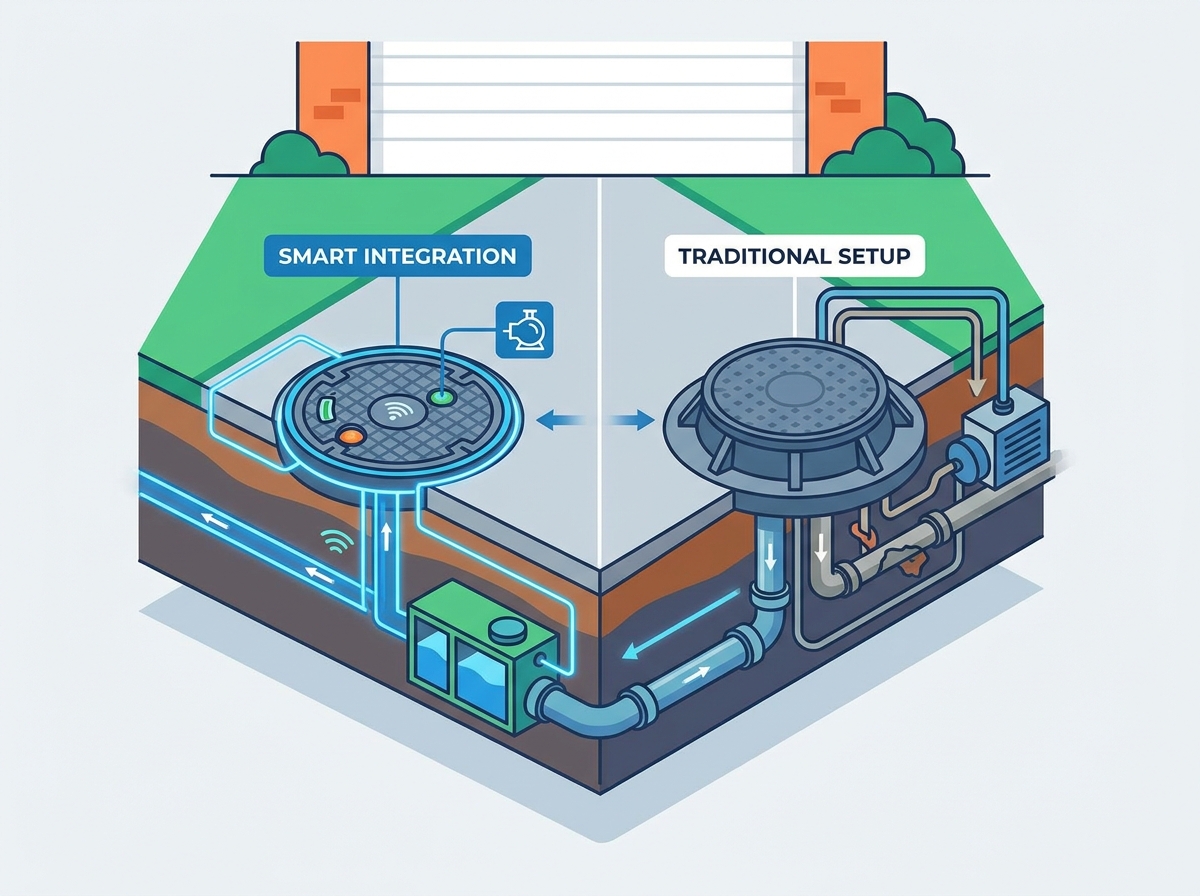
Successful implementation begins with precise field measurements. Measuring existing vault dimensions, concrete collar integrity, and grade slope ensures a flush installation. A cover that sits even a quarter-inch above the driveway surface creates a jarring impact every time a vehicle rolls over it. This impact eventually destroys the concrete anchoring. You must measure the diagonal dimensions of the vault to check for squareness before ordering a custom frame.
Addressing uneven driveway surfaces often dictates the necessity of custom-fabricated frames. Standard off-the-shelf frames assume a perfectly level grade. In reality, driveways slope for drainage. Custom fabricators design frames with specific tapers or adjustable skirts. These match the exact pitch of the surrounding asphalt or concrete. This ensures a seamless transition and prevents snowplows from catching the edge of the frame during winter maintenance.
A cover must facilitate maintenance, not hinder it. Designing hatch configurations based on the physical size of the water pump dictates whether a single-door or double-door system is required. Maintenance crews need sufficient clear opening space to attach hoists and extract heavy pump units. They should not have to dismantle the entire frame to pull a pump for service.
Incorporating specialized cutouts, watertight seals, or secondary access ports allows for proper cable routing. Electrical conduits, sensor lines, and discharge hoses need dedicated pathways. These pathways must not compromise the main cover's seal. Providing a strict checklist for construction contractors to accurately measure clear openings, frame widths, and total depth ensures the custom fabrication fits perfectly on the first attempt. Measure twice, fabricate once.
Functionality does not have to sacrifice appearance. Selecting slip-resistant tread patterns, such as diamond plate or custom casting, guarantees pedestrian and vehicle safety in wet conditions. Smooth metal plates become severe slip hazards when covered in rain or snow. You must specify a coefficient of friction that meets local safety standards for walking surfaces.
For high-end residential or commercial properties, evaluating recessed covers provides a superior aesthetic solution. These specialized covers feature a built-in pan designed to accept paving stones, poured concrete, or resin-bound gravel. This allows the utility access to blend seamlessly with landscaping and hardscaping projects. It maintains full H-20 load capacity while hiding the industrial appearance of the steel plate.
Removing the guesswork for future maintenance crews requires proactive design choices. Integrating cast-in or engraved labeling directly into the metal surface ensures clear system identification. Labels reading "WATER PUMP - DO NOT OBSTRUCT" or "CONFINED SPACE - AUTHORIZED PERSONNEL ONLY" provide immediate context. This permanent identification survives weather and wear. It guarantees that future property owners understand exactly what infrastructure they are managing. We always specify welded bead lettering on custom steel covers for maximum durability.
Interacting with subterranean infrastructure during active storm events presents severe safety risks. Addressing the hazards of opening manhole covers during heavy rain reveals the dangers of groundwater inrush. Removing a cover while the surrounding area is flooded can create a massive suction effect. This draws in surface debris and creates drowning hazards for maintenance personnel. Furthermore, atmospheric pressure traps can release suddenly, causing physical injury.
Establishing strict maintenance schedules that preempt storm seasons avoids emergency interventions. Inspecting pump impellers, clearing debris from the vault, and testing the cover's locking mechanisms during dry weather ensures the system operates autonomously during severe weather events. You should never attempt to pull a pump while the vault is actively taking on storm water.
The best cover in the world will fail if the frame is improperly installed. Detailing the risks of improper concrete anchoring highlights why frames shift and rattle under traffic. If a contractor relies solely on gravity or weak mortar, the dynamic loads from vehicles will break the bond. This leads to frame shifting. It compromises the watertight seal and eventually causes structural failure of the concrete collar.
Implementing best practices for frame seating requires industrial-grade materials. Using epoxy anchoring systems and non-shrink grout ensures a permanent bond between the metal frame and the concrete vault. Leveling the frame meticulously in the driveway environment before the grout sets prevents uneven load distribution. You must allow the grout to achieve full cure strength before allowing any vehicle traffic over the new installation.
Securing dynamic driveway pathways while maintaining seamless access to critical water infrastructure requires an engineered, load-tested approach. Implement the following steps to ensure long-term success:
A: Driveway installations require an AASHTO H-20 or HS-20 load rating. This ensures the cover and frame can withstand the dynamic weight and rotational friction of residential vehicles, delivery trucks, and emergency equipment without deforming or collapsing.
A: Rattling indicates improper frame seating, degraded concrete anchoring, or a mismatched cover-to-frame tolerance. Over time, dynamic vehicle loads break down weak mortar, causing the frame to shift. This requires re-seating the frame with non-shrink grout or epoxy anchoring.
A: It depends on the pump's function. If the chamber processes materials that generate hazardous sewer gases, it requires a vented design for pressure relief. If the goal is to protect electrical pump components from surface floodwater, a watertight, gasketed cover is necessary.
A: Covers dislodge due to extreme hydrostatic pressure from rising groundwater or sudden gas release. Prevent this by installing covers with secure bolting mechanisms, cam locks, and appropriate pressure relief vents that equalize the atmospheric pressure inside the vault.
A: Yes, you can utilize a recessed cover designed to accept paving stones, poured concrete, or resin-bound gravel. These specialized covers blend seamlessly with your hardscaping while maintaining the necessary structural load capacity for vehicle traffic.


