
Views: 0 Author: Site Editor Publish Time: 2026-07-09 Origin: Site


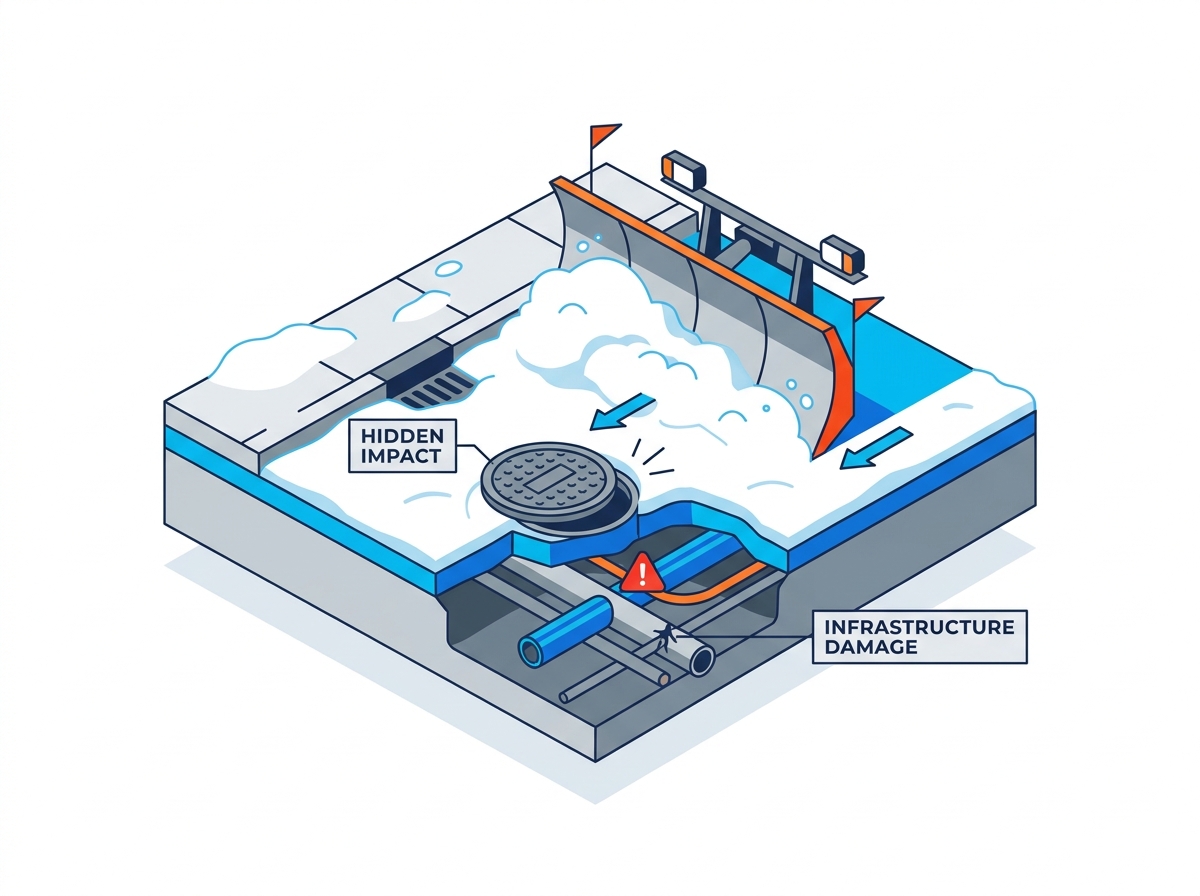
Striking a concealed obstacle at plowing speeds is not just an operational inconvenience; it is a rapid-deceleration event that immediately threatens operator safety, equipment integrity, and public infrastructure. Winter precipitation routinely conceals raised, uneven, or degraded utility access points. For fleet managers and municipal contractors, these hidden obstacles transform routine route clearing into high-liability operations resulting in cracked moldboards, bent cutting edges, and severe infrastructure damage. snowplow manhole cover hazards represent one of the most unpredictable variables in winter road maintenance.
Moving from reactive equipment repair to proactive hazard mitigation requires a multi-tiered approach. Relying on operator memory during a blizzard is a failing strategy. True risk reduction demands pre-season infrastructure auditing, strategic equipment selection, and specialized operator training. By addressing these hidden dangers before the first snowfall, organizations can protect their fleets, reduce emergency downtime, and ensure safer roadways for the communities they serve.
Freeze-thaw cycles cause asphalt to heave and shift, often leaving rigid cast-iron manhole covers protruding above the plowable surface. When a heavy-duty plow blade meets an immovable iron object hidden beneath packed snow, the resulting collision transfers massive kinetic energy directly into the equipment and the surrounding environment. We see this constantly on older municipal roads where utility shafts settle at different rates than the surrounding pavement.
Striking a stationary iron object at 15 to 25 mph generates extreme force. This force distribution immediately bends cutting edges and fractures moldboard welds. Standard steel blades offer no shock absorption, meaning the impact energy must go somewhere. It travels upward and backward into the truck.
The ripple effect of this impact force travels through the A-frame and mounting assembly. This leads to premature vehicle chassis fatigue, wing plow mount failure, and severe alignment misalignment. Over time, repeated minor strikes weaken the structural integrity of the entire plow setup. You end up turning a minor collision into a catastrophic failure that snaps mounts or twists the truck frame.
Mid-storm breakdowns cripple snow removal operations. A downed truck during a severe weather event means missed service agreements and frustrated clients. Emergency welding and repair rates during a blizzard are exorbitant. Furthermore, a truck sitting in the shop is not clearing routes. This forces other operators to work longer hours, increasing fatigue and the likelihood of further accidents.
The biomechanical impact of sudden deceleration on snowplow operators is severe. A high-speed strike can cause whiplash, concussions, and steering-wheel impact injuries. The operator is thrown forward violently, often resulting in lost work days and workers' compensation claims.
Beyond the cab, the extreme danger of a plow blade catching the edge of a cover and lifting or throwing it completely out of its collar cannot be overstated. This leaves an open utility shaft hidden by falling snow. It becomes a lethal hazard for subsequent vehicular traffic and pedestrians who cannot see the missing cover.
Dislodged manhole covers, fractured iron collar fragments, and shattered plow components can be launched into active traffic lanes. These projectile hazards cause multi-vehicle crashes, rollovers, or windshield penetrations. Additionally, an unexpected, high-speed strike can cause a plow vehicle to violently pivot or drift into adjacent lanes, endangering passing vehicles and pedestrians.
Assessing snow removal attachments requires looking beyond scraping power. Success depends on the equipment's ability to clear hard-packed snow while safely absorbing or bypassing rigid infrastructure strikes. You need gear that survives the route.
Full trip-blade mechanics involve the entire moldboard tipping forward upon impact. While this design is simple, it results in the complete loss of the snow load. It also carries the potential for secondary damage and often fails to mitigate high-speed impacts on deeply inset covers effectively.
Conversely, trip-edge mechanics allow only the lower cutting edge to yield to obstacles. The main moldboard remains upright, retaining the snow load. This design absorbs the shock of the strike and allows the plow to glide over the obstruction. This is the industry standard for environments with high snowplow manhole cover hazards.
Plows designed with multiple independent sections offer a distinct advantage. These independent segments yield and rise over individual obstacles, like uneven manhole covers, while the rest of the blade remains flush with the pavement. This ensures maximum clearing efficiency without sacrificing safety.
While the initial capital expenditure of sectional plows is higher than traditional straight blades, the long-term savings are substantial. Organizations see reduced cutting edge wear, minimized pavement damage, and significantly fewer infrastructure repairs.
Selecting the right cutting edge material is a balancing act between scraping performance and impact survival. You have to match the material to the specific route conditions.
| Material Type | Shock Absorption | Scraping Power | Best Application |
|---|---|---|---|
| Standard Steel | Zero | High | Flat, even highways with known infrastructure. |
| Polyurethane / Rubber | High | Low to Medium | Decorative surfaces, highly uneven municipal roads. |
| Carbide-Inserted / Flexible Steel | Medium | High | Mixed environments requiring a balance of scrape quality and impact survival. |
Equipment upgrades only solve half the equation. Altering the environment and mapping the terrain is required for comprehensive risk management. You cannot avoid what you do not know is there.
Driving routes before the first snowfall is a necessity. These dry-run inspections allow teams to log protruding manhole covers, degraded curbs, hidden speed bumps, and high utility access points. Documenting these hazards when the ground is bare is the only way to prepare for when it is covered in white.
Utilizing fleet management software to drop digital pins on known hazards takes this a step further. Modern telematics and geofencing can trigger in-cab audible alerts as operators approach high-risk zones, providing crucial seconds to adjust speed or blade angle.
Implementing high-visibility, breakaway fiberglass markers at utility access points, curb lines, and transition zones provides immediate visual cues to operators. Standardization of these markers ensures that any operator, regardless of their experience on a specific route, understands the hazard layout.
Defining liability in commercial contracts regarding who is responsible for marking hazards is critical. Clear agreements must dictate whether the property owner or the snow removal contractor bears the responsibility for installing and maintaining these physical markers.
Municipalities must take proactive steps to adjust utility covers flush with the road surface prior to winter. Riser rings and pavement milling are effective strategies for eliminating the physical protrusion that catches plow blades.
Evaluating the installation of plow-friendly, beveled manhole covers is another long-term solution. Tapered and heavy-duty cover designs are engineered to deflect plow blades upward, rather than catching them head-on, significantly reducing the severity of strikes.
Technology and equipment fail if operator behavior is not aligned with safety protocols. The human element remains the most critical factor in preventing catastrophic damage.
The severity of damage increases exponentially relative to plowing speed. Kinetic energy management is vital. Establishing strict speed limits for specific route types reduces the force of unavoidable impacts.
Training operators on optimal blade angling is equally important. Angling the blade deflects impact energy laterally rather than absorbing it head-on. A straight-on strike transfers all the force into the truck. An angled strike allows the blade to glance off the obstruction.
Putting seasonal or novice operators in complex municipal environments without route familiarization is a recipe for disaster. High turnover and inexperience lead directly to increased hazard strikes and equipment damage.
Establishing a clear, non-punitive reporting structure for when an operator strikes a hidden hazard is essential. This ensures immediate inspection of both the vehicle and the local infrastructure, preventing subsequent accidents and catching structural damage before it leads to catastrophic failure.
Striking hidden infrastructure is an inevitable part of winter operations, but catastrophic damage is entirely preventable. Relying solely on operator vigilance during low-visibility, high-stress storms is an inadequate strategy that exposes organizations to massive liability and repair costs. Municipalities and commercial contractors must invest in a dual approach. Upgrading to trip-edge or sectional plow equipment absorbs unavoidable impacts, while implementing rigorous pre-season GPS mapping and physical marking helps avoid them altogether.
A: Striking a raised manhole cover typically results in bent or shattered cutting edges, cracked moldboard welds, damaged A-frame mounting systems, and severe alignment issues for the truck chassis.
A: Trip-edge plows feature a hinged lower cutting edge that folds back upon striking a rigid obstacle. This absorbs the kinetic energy of the impact, allowing the plow to glide over the hazard without transferring the shock to the vehicle or dropping the snow load.
A: Yes. If the plow blade catches a protruding cover at the correct angle and speed, it can wrench the cover completely out of its frame. This creates a severe safety hazard, leaving an open sewer or utility hole that is invisible to subsequent drivers and pedestrians.
A: Liability depends on the contract and jurisdiction. Generally, if a contractor fails to perform a pre-season site inspection or ignores marked hazards, they may be liable. However, municipalities may hold liability if the infrastructure was improperly maintained or severely heaved beyond acceptable road standards.
A: Yes. Modern fleet telematics allow managers to map known hazards—such as raised manhole covers, speed bumps, and tight curbs—during dry runs. These systems can provide in-cab visual or audible warnings to operators as they approach the GPS-pinned locations.
A: Polyurethane and rubber cutting edges offer superior shock absorption and will glide over uneven surfaces much better than rigid steel. While they prevent damage to both the plow and the infrastructure, they generally have a shorter lifespan and lower scraping power on hard-packed ice compared to steel or carbide.


